
Property Tax Rates Across Durham, Wake, Orange & Chatham Counties
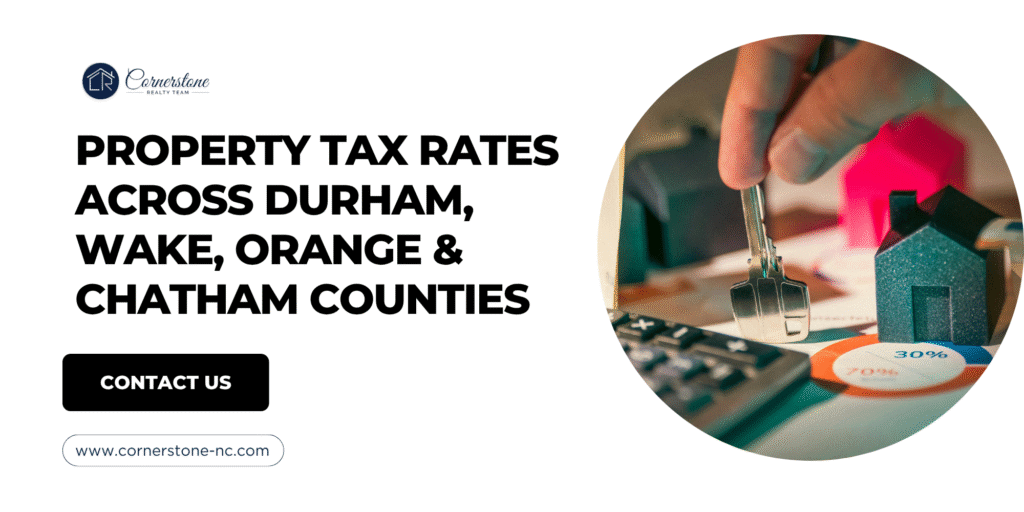
When buyers compare homes across county lines in the Triangle, they almost always focus on purchase price — and almost never factor in property tax. That’s a mistake, because the difference between counties (and even between towns within the same county) can add hundreds of dollars a month to your actual housing cost. Two similarly priced homes in Durham versus Chapel Hill can carry meaningfully different tax bills once you account for both county and municipal rates. Here’s how the numbers actually break down, based on current FY 2026-27 rates. How Property Tax Actually Works Here In North Carolina, your property tax bill is a combination of your county rate plus, if you live inside city or town limits, a municipal rate on top of it. Someone living in unincorporated Durham County pays a different rate than someone living inside Durham city limits, even though they’re in the same county. This is why “what’s the property tax rate in Durham?” doesn’t have a single answer — it depends on the specific address. Rates are expressed per $100 of assessed value. So a combined rate of $1.00 means $1,000 in annual tax per $100,000 of assessed home value. The Comparison County Unincorporated (county only) Inside major city/town Notes Wake From $0.5371 Raleigh $0.9091 · Cary $0.9046 · Apex $0.9106 · Morrisville $0.8871 Widest range of any county in the Triangle Durham From $0.6262 Durham (city) $1.0163 · Chapel Hill portion $1.0792 Rates rose again for FY 2026-27 Orange From $0.7440 Chapel Hill $1.3284 · Carrboro $1.3937 · Hillsborough $1.1935 Highest combined rates in the Triangle Chatham From $0.6700 Pittsboro $1.0400 · Siler City $1.1400 Generally the most affordable of the four on a tax basis Rates effective July 1, 2026, combined county + municipal. Individual parcels may include additional fire district or special district fees not reflected here — always confirm the exact rate for a specific address before making an offer. What This Means in Practice Orange County carries the highest tax burden in the Triangle, driven largely by Chapel Hill and Carrboro’s combined rates, which are both well above $1.30 per $100 of value. On a $500,000 home in Carrboro, that’s roughly $6,970 a year in property tax alone — meaningfully more than a comparably priced home in most of Durham or Wake County. Durham’s rates climbed again this year, continuing a trend of increases in recent budget cycles. If you’re comparing a home in the city of Durham to one in unincorporated Durham County, the difference in your tax bill can be substantial even at the same purchase price. Wake County still offers some of the lowest municipal rates in the region, particularly in towns like Morrisville and Holly Springs — part of why Wake continues to be attractive to price-sensitive buyers, even with home prices trending higher there overall. Chatham County is worth a look for buyers priced out of Orange or Durham, especially for those willing to live a bit further out — its combined rates are consistently lower, though it’s a tradeoff against commute time for most Triangle-area jobs. Why This Matters When You’re Comparing Homes It’s easy to compare two listings purely on sale price and assume the monthly payment will scale proportionally. It won’t, once you factor in tax. A $450,000 home in unincorporated Durham County and a $450,000 home in Chapel Hill can carry a meaningfully different monthly payment purely due to the tax rate difference — enough, in some cases, to change what you can actually afford to borrow. This is exactly the kind of detail that’s easy to overlook when you’re focused on square footage and school zones, and it’s one of the more common surprises we see catch buyers off guard after closing. The Bottom Line Property tax rates are one of the most overlooked line items in a home purchase — but they shouldn’t be, especially when comparing homes across county or town lines. Before you fall in love with a listing, it’s worth getting the exact combined rate for that specific address, not just a county-wide average. Don’t Let a Line Item Become a Budget Surprise Property tax is just one of several costs that catch buyers off guard. Our free Triangle Buyer Playbook walks through the full picture — from taxes and closing costs to the mistakes that cost Triangle buyers thousands — so you can budget with confidence before you ever make an offer. Get the Free Buyer Playbook
Durham & Orange County Housing Market Snapshot — Q3 2026
This is a recurring quarterly post — expect updated numbers each quarter as the market shifts. Every few months we like to pause and give a straight, no-hype read on where things actually stand — not a sales pitch, just the numbers that matter if you’re thinking about buying or selling in Durham or Orange County. Here’s the picture heading into Q3 2026, and it’s a story of two fairly different markets sitting right next to each other. Durham County: Moving Toward Balance After years of a tight, competitive market, Durham County has clearly shifted gears. Inventory has climbed sharply — up an estimated 25-30% year-over-year — giving buyers a level of selection they haven’t had in years. That extra supply has come with: Longer time on market: homes are typically taking 50-78 days to sell, compared to well under 45 days during the peak frenzy years Prices holding roughly flat to slightly down year-over-year, depending on the specific data source and time period Homes still selling close to asking price — around 99% of list price on average — which tells us this is a normalization, not a downturn Roughly 1.5 months of supply, still on the tighter side of “balanced” but a big change from the near-zero inventory of recent years What this means: Durham is no longer a market where buyers need to waive every contingency and offer well over asking just to compete. Sellers still have solid footing, but pricing realistically from day one matters more than it did two years ago — homes priced based on 2022-2023 peak comps are the ones sitting the longest. Orange County: A Different Story, Especially in Chapel Hill Just west of Durham, Orange County — and Chapel Hill in particular — is telling a noticeably different story. This market has stayed considerably tighter: Chapel Hill inventory remains very lean, with well under a month of supply in some recent readings Homes are moving fast, often in the 30-40 day range, with some reports showing multiple offers still common Prices in Chapel Hill have continued climbing, with recent data showing double-digit year-over-year gains in median sale price, even as the broader Triangle cools Orange County overall (which includes more affordable pockets outside Chapel Hill/Carrboro, like parts of Hillsborough and Mebane) shows a softer picture than Chapel Hill specifically, with median prices closer to flat or slightly down Why the gap? Orange County’s long-standing rural buffer and low-density zoning between Chapel Hill/Carrboro and Hillsborough has intentionally limited new development for decades. That structural supply constraint means Chapel Hill in particular doesn’t cool the way the rest of the Triangle does, even in a broader market normalization. Some recent zoning reforms may loosen this over time, but the impact will be gradual. What This Means If You’re Buying If you’re buyer looking in Durham, this is a genuinely better environment than it’s been in years — more homes to choose from, more time to make a decision, and more room to negotiate on homes that have sat a while. If you’re set on Chapel Hill or Carrboro specifically, expect the old rules to still mostly apply: come prepared to move quickly and competitively, and don’t expect much negotiating room on well-priced, well-located listings. What This Means If You’re Selling Regardless of which county you’re in, the sellers doing best right now are the ones who treat pricing and presentation seriously from the very first day on market — that matters even more in Durham’s more balanced conditions, where buyers have options and aren’t rushing to overlook flaws. First impressions (photos, staging, that critical first two weeks of listing activity) carry more weight in a market where buyers aren’t in a bidding-war frenzy. Getting Your Home Ready to List? Whether you’re in Durham’s more balanced market or Chapel Hill’s still-competitive one, presentation matters more than ever. Our free guide, 21 Steps to Get Your House Show-Ready, walks through exactly what to tackle before your first showing — so your home makes the strongest possible first impression. Get the Free Guide → The Bottom Line Durham and Orange County are, right now, two different markets wearing the same “Triangle” label. Durham has genuinely normalized into more balanced conditions. Chapel Hill and Carrboro remain tight, competitive, and structurally supply-constrained. Whichever side of that line you’re on, the numbers matter more than general “Triangle market” headlines — reach out anytime for a read on your specific neighborhood. We’ll be back with an updated snapshot next quarter — check back or subscribe to get it directly.
What Is Real Estate? A Complete Beginner’s Guide

Real estate plays an important role in everyday life. Whether you want to buy your first home, invest in property, or sell a house, knowing the basics helps you make better choices. Real estate includes land and anything built on it, such as houses, apartments, office buildings, and commercial spaces. Every property has its own value based on location, condition, size, market demand, and nearby amenities. If you are planning to move to a new city or neighborhood, home relocation area guidance can help you compare schools, transportation, healthcare, shopping, and other services before making a decision. Taking time to review these factors helps you choose a place that matches your lifestyle and long-term goals. What Is Real Estate? Real estate refers to land and permanent structures attached to it. These structures may include homes, condominiums, office buildings, warehouses, retail stores, and industrial facilities. Unlike movable personal belongings such as furniture or vehicles, real estate stays in one location. People buy real estate for many reasons. Some want a comfortable place to live, while others purchase property to earn rental income or build long-term wealth. Businesses also buy or lease commercial properties to operate their companies. Main Types of Real Estate Real estate falls into several categories. Each serves a different purpose. Residential Real Estate Residential real estate includes properties where people live. Common examples include: Single-family homes Apartments Townhouses Condominiums Duplexes Vacation homes This type of property is the most common choice for first-time buyers and families. Commercial Real Estate Commercial real estate includes buildings used for business activities. Examples include: Office buildings Shopping centers Restaurants Hotels Retail stores These properties often generate income through leases and long-term tenants. Industrial Real Estate Industrial properties support manufacturing, production, storage, and distribution. Examples include: Factories Warehouses Distribution centers Logistics facilities Demand for industrial space continues to grow as online shopping expands. Land Land includes vacant lots, farmland, and undeveloped property. Buyers may build homes, commercial buildings, or agricultural projects depending on local zoning rules. How the Real Estate Market Works The real estate market changes based on supply and demand. When many buyers compete for a limited number of homes, prices usually rise. When more properties are available than buyers, prices often become more competitive. Several factors influence property values, including: Interest rates Employment levels Population growth Local economy Neighborhood development School quality Public transportation Monitoring these factors helps buyers and sellers make informed decisions. Important Terms Every Beginner Should Know Learning common real estate terms makes the buying process easier. Market Value Market value is the price a buyer is willing to pay and a seller agrees to accept under normal market conditions. Mortgage A mortgage is a loan used to purchase property. Buyers repay the loan with monthly payments over an agreed period. Down Payment The down payment is the amount paid upfront before financing the remaining purchase price. Equity Equity is the difference between your property’s market value and the remaining mortgage balance. As you repay your loan and property values increase, your equity grows. Steps to Buy Your First Property Buying real estate requires planning and preparation. Set Your Budget Review your income, savings, monthly expenses, and future financial goals. Choose a budget that remains comfortable even if unexpected expenses arise. Get Pre-Approved Mortgage pre-approval helps you know how much you can borrow. It also shows sellers that you are a serious buyer. Choose the Right Location Location affects both property value and daily convenience. Look at schools, healthcare facilities, parks, shopping centers, commute times, and future community development before making your decision. Inspect the Property A professional inspection helps identify structural issues, electrical problems, plumbing concerns, roofing conditions, and other repairs before closing. Close the Deal Once financing, inspections, and legal documents are complete, ownership transfers to the buyer. Common Mistakes First-Time Buyers Should Avoid Many first-time buyers make avoidable mistakes during their property search. Some buyers focus only on the listing price and forget about taxes, insurance, maintenance, and utility costs. Others rush into a purchase without comparing multiple properties. Skipping a home inspection can also become expensive later. Hidden repairs may cost thousands of dollars after closing. Another mistake involves choosing a home without thinking about future needs. Consider your family size, career plans, and lifestyle before making a long-term investment. Why Local Knowledge Matters Every housing market has unique trends. Property values, neighborhood growth, schools, taxes, and future developments can differ from one area to another. People looking for real estate guidance often benefit from working with professionals who know the local market. Reliable information about neighborhoods, pricing, and current conditions can help buyers avoid costly mistakes and make confident decisions. Why Working With a Real Estate Professional Helps Buying or selling property involves contracts, negotiations, inspections, financing, and legal paperwork. An experienced agent helps manage every stage while protecting your interests. A local real estate expert Triangle NC can provide valuable insight into pricing trends, neighborhood features, available inventory, and current market conditions. Their knowledge can save time, reduce stress, and help you make informed choices. Final Thoughts Real estate is one of the most important investments you can make, and having the right information helps you make confident decisions. Whether you’re buying your first home, selling a property, or planning your next move, working with experienced professionals can make the process much easier. Cornerstone Realty Team is committed to helping buyers and sellers across the Triangle area with trusted advice and personalized service. To learn more about our services or get in touch with our team, visit Cornerstone Realty Team or contact us through the website to schedule your consultation. Real estate plays an important role in everyday life. Whether you want to buy your first home, invest in property, or sell a house, knowing the basics helps you make better choices. Real estate includes land and anything built on it, such as houses, apartments, office buildings, and commercial spaces. Every property has its own value based on location,
How Can You Find Trusted Real Estate Guidance Triangle NC?

Buying or selling a home is one of the biggest financial decisions many people make. The process can feel simple when you have the right professional by your side, but it can quickly become stressful without reliable advice. A trusted real estate expert helps you make smart choices, avoid costly mistakes, and move forward with confidence. Whether you are purchasing your first home, upgrading to a larger property, or preparing to sell, choosing the right guidance matters from the very beginning. The search for real estate guidance Triangle NC starts with finding a professional who knows the local market, listens to your goals, and communicates clearly. A skilled real estate advisor does more than arrange property tours or list homes. They provide valuable insights about neighborhoods, pricing, market trends, and every step involved in the transaction. Their experience helps you make decisions based on facts instead of guesswork. Why Trust Matters in Real Estate Trust plays a major role in every real estate transaction. A dependable agent puts your interests first and works to achieve the best possible outcome. They answer your questions honestly, explain each step, and keep you informed throughout the process. A trusted real estate professional should have: Strong knowledge of the local housing market. Excellent communication skills. Positive client reviews and testimonials. A history of successful transactions. A commitment to transparency and honesty. Strong negotiation skills. Quick responses to calls, emails, and messages. These qualities help build confidence and reduce stress during the buying or selling journey. Check Local Market Experience Every housing market has unique trends. Home prices, buyer demand, inventory, and neighborhood growth can vary from one area to another. An experienced local real estate professional knows how these factors affect your decision. They can explain: Current home values. Popular neighborhoods. School districts. Future community growth. Local amenities. Market conditions for buyers and sellers. This local knowledge helps you make informed choices that fit your budget and long-term plans. Read Reviews Before Choosing an Agent Online reviews provide helpful information about an agent’s reputation. Past clients often share honest feedback about communication, professionalism, and results. When reading reviews, look for comments about: Timely communication. Honest advice. Professional service. Successful negotiations. Problem-solving skills. Overall client satisfaction. Consistent positive feedback usually reflects reliable service. Ask the Right Questions Before hiring a real estate professional, schedule a meeting and ask important questions. Their answers will help you decide whether they are the right fit. Consider asking: How long have you worked in this market? Experience often leads to better advice and stronger negotiation skills. How will you communicate with me? Regular updates help you stay informed during every stage of the process. What is your strategy? Every buyer and seller has different goals. A good agent explains their approach based on your specific needs. Can you provide client references? Speaking with previous clients gives you additional confidence before making your decision. Compare More Than One Professional Meeting with several real estate professionals allows you to compare experience, communication style, and market knowledge. Pay attention to: Professionalism. Listening skills. Local expertise. Availability. Marketing approach. Negotiation experience. Choosing someone simply because they offer the lowest commission may not deliver the best results. Quality service often creates greater value throughout the transaction. Look for Honest Communication Real estate decisions involve significant financial commitments. A trustworthy professional provides honest advice even when the conversation becomes difficult. Instead of making unrealistic promises, they explain market conditions clearly and recommend practical solutions. This honesty helps you avoid disappointment and make informed decisions. Ask About Home Relocation Support Moving to a new city involves much more than buying a house. You also need information about schools, healthcare, transportation, shopping, and daily life. Many experienced professionals provide home relocation area guidance to help families choose neighborhoods that match their lifestyle, commute, and future plans. This added support can make the transition much easier. Selling Your Home with Confidence Selling a property requires careful planning. Pricing, marketing, home presentation, and negotiation all influence the final outcome. Experienced professionals provide home selling guidance by helping homeowners prepare their property, attract qualified buyers, manage offers, and complete the transaction efficiently. Their knowledge can improve both the selling experience and the final sale price. Signs You Have Found the Right Real Estate Professional A reliable real estate advisor will: Listen carefully to your goals. Explain every step clearly. Respond promptly. Provide honest market advice. Respect your budget. Keep you informed throughout the process. Protect your interests during negotiations. Maintain professionalism from start to finish. These qualities often lead to a smoother transaction and greater peace of mind. Common Mistakes to Avoid Many buyers and sellers make avoidable mistakes that create delays or financial loss. Avoid these common errors: Choosing an agent without checking reviews. Making decisions based only on price. Ignoring local market conditions. Signing documents without asking questions. Failing to compare multiple professionals. Rushing into important decisions. Not discussing expectations early. Taking time to choose the right advisor often leads to better results. Why Local Knowledge Makes a Difference A professional with strong local experience can identify opportunities that online listings alone cannot provide. They know which neighborhoods are growing, where demand is increasing, and how pricing compares across different communities. Their insight also helps buyers avoid overpaying and helps sellers price their homes competitively. Local expertise creates confidence throughout every stage of the transaction. Frequently Asked Questions (FAQs) 1. Why should I work with a local real estate professional? A local expert understands neighborhood trends, pricing, schools, and market conditions, helping you make better decisions. 2. How can I tell if a real estate agent is trustworthy? Check online reviews, ask for client references, verify experience, and pay attention to communication during your first meeting. 3. Should I interview more than one real estate professional? Yes. Comparing multiple professionals helps you evaluate experience, communication style, and overall service before making your choice. 4. What should I ask before hiring a real estate agent? Ask about local
How Do Real Estate Services Help You Buy the Right Property?

Buying a property is one of the biggest financial decisions most people make. Whether you are purchasing your first home, upgrading to a larger space, or investing in real estate, the process can feel overwhelming. From searching for the right neighborhood to reviewing contracts and negotiating the final price, every step requires careful attention. That is why many buyers choose to work with experienced real estate professionals who make the journey smoother and more organized. Many buyers also benefit from services such as home listing preparation, even when they plan to purchase another property. Selling your current home before buying a new one often improves your budget and gives you more options in the market. A well-planned strategy helps you move from one property to the next with greater confidence and fewer unexpected delays. Why Professional Real Estate Services Matter Buying a home involves much more than finding a property that looks attractive online. You need accurate market information, reliable advice, and someone who can protect your interests throughout the transaction. A real estate professional helps you identify properties that match your budget, lifestyle, and future plans. Instead of spending countless hours searching listings that may not fit your needs, you receive recommendations based on your goals. They also explain every stage of the buying process, making it easier to make informed decisions without unnecessary stress. Save Time During Your Property Search Searching for a home can quickly become frustrating when hundreds of listings appear online. Many properties may already be under contract, priced above your budget, or located in areas that do not suit your lifestyle. A real estate agent narrows the search by focusing on homes that meet your specific requirements. They arrange property viewings, answer your questions, and provide valuable details that are not always available in online listings. This organized approach saves time and helps you focus only on properties worth considering. Get Accurate Market Knowledge Property prices vary based on location, demand, school districts, nearby amenities, and current market conditions. Without reliable information, buyers may pay more than necessary or miss valuable opportunities. Experienced agents monitor local market trends every day. They compare similar properties, review recent sales, and explain whether a home’s asking price reflects current market value. This knowledge allows buyers to make competitive offers without exceeding their budget. Receive Professional Negotiation Support Negotiating the purchase price is one of the most important parts of buying a property. Sellers naturally want the highest possible price, while buyers want the best value. An experienced real estate professional represents your interests throughout negotiations. They communicate with the seller’s agent, discuss pricing, negotiate repairs, and work to secure favorable contract terms. Professional negotiation can often save buyers money while reducing unnecessary conflict during the transaction. Avoid Costly Mistakes Buying a property involves legal documents, inspection reports, financing requirements, and closing procedures. Missing important details may lead to expensive problems later. A real estate professional reviews paperwork carefully and keeps the process moving on schedule. They remind you about important deadlines and help coordinate communication between lenders, inspectors, attorneys, and sellers. Their guidance reduces the risk of avoidable mistakes that could delay or complicate your purchase. Understand the Home Inspection Process A property may appear perfect during a showing, but hidden issues can exist behind the walls, under the roof, or within the plumbing and electrical systems. A home inspection provides valuable information about the property’s condition. Your real estate agent explains inspection findings and helps you decide whether to request repairs, negotiate credits, or continue with the purchase. This step protects your investment and gives you greater peace of mind before closing. Support for First-Time Homebuyers Buying a first home often comes with many questions. Mortgage options, down payments, insurance, taxes, and closing costs may seem confusing at first. A knowledgeable real estate professional explains each step using simple language. They answer your questions, help you prepare documents, and guide you through the buying process from start to finish. This support makes first-time buyers feel more prepared and confident. Assistance When Buying a Newly Built Home Many buyers believe they do not need an agent when purchasing directly from a builder. However, builders usually have representatives who work for the builder’s interests. Having new home construction representation means you have someone reviewing contracts, explaining upgrade options, monitoring timelines, and helping protect your interests throughout the purchase process. Independent guidance allows you to make informed decisions before signing important agreements. Helpful Advice If You Need to Sell First Many homeowners need to sell their current property before purchasing another one. Coordinating both transactions requires careful planning. Professional home selling guidance helps you determine the right pricing strategy, prepare your property for buyers, manage showings, and schedule both transactions efficiently. A well-organized plan reduces stress and helps create a smoother transition into your next home. Choose the Right Real Estate Professional Not every real estate agent provides the same level of service. Take time to choose someone with strong local market knowledge, clear communication skills, and experience working with buyers who have goals similar to yours. Read reviews, ask questions, and discuss your expectations before making a decision. A trusted professional listens carefully, provides honest advice, and keeps your priorities at the center of every recommendation. Building a strong working relationship makes the entire buying experience more enjoyable. Final Thoughts Buying the right property requires more than finding an attractive house. It involves careful planning, accurate market knowledge, skilled negotiation, and attention to every detail throughout the process. Working with experienced real estate professionals helps reduce stress, avoid common mistakes, and make confident decisions from your first property search to closing day. Whether you are purchasing your first home or your next investment, the experienced professionals at Cornerstone Realty Team are ready to help you move forward with confidence. Frequently Asked Questions (FAQs) 1. Why should I use a real estate agent when buying a home? A real estate agent provides market knowledge, schedules property showings, negotiates
Why Is Real Estate Guidance Triangle Important for Home Buyers?

Buying a home is one of the biggest financial decisions you will ever make. Every choice, from selecting the right neighborhood to reviewing contracts, affects your future. While online listings provide useful information, they cannot replace professional advice that helps you avoid costly mistakes. Working with an experienced real estate professional gives you confidence throughout the buying process and helps you make informed decisions. Choosing the best realtor in real estate guidance Triangle can make your home-buying journey much smoother. A knowledgeable professional knows the local housing market, explains every step clearly, negotiates on your behalf, and helps you find a property that fits both your lifestyle and budget. Instead of feeling overwhelmed, you can focus on finding a place that truly feels like home. Why Professional Real Estate Guidance Matters The housing market changes throughout the year. Home prices, inventory, mortgage rates, and buyer demand all influence your purchasing decision. Without expert advice, it becomes easier to miss opportunities or pay more than necessary. A real estate professional helps you analyze market conditions, compare properties, and identify homes that match your needs. Their experience also helps you avoid common mistakes that first-time buyers often make. Professional guidance saves time and reduces unnecessary stress during every stage of the transaction. Local Knowledge Makes a Difference Every neighborhood has its own character, school districts, amenities, transportation options, and future growth plans. Someone with experience in real estate guidance Triangle NC knows how different communities compare. They can explain which areas fit your priorities, whether you want shorter commutes, family-friendly neighborhoods, or convenient access to shopping and entertainment. Local market knowledge helps buyers make confident decisions instead of relying only on online descriptions. Save Time During Your Home Search Searching for a home without a plan often leads to frustration. A real estate professional narrows your options based on your budget, preferred location, desired home size, and must-have features. Instead of visiting dozens of homes that do not meet your needs, you spend time viewing properties that have a much better chance of becoming your future home. This organized approach makes the buying process far more efficient. Get Accurate Property Evaluations Not every home listed online reflects its true market value. A realtor compares similar properties, reviews recent sales, and evaluates neighborhood trends before helping you prepare an offer. This research helps buyers avoid overpaying while remaining competitive in active markets. Making informed decisions protects your investment from the very beginning. Strong Negotiation Can Save Money Negotiation plays an important role in every real estate transaction. A skilled realtor negotiates more than just the purchase price. They also discuss repair requests, closing costs, inspection findings, and contract timelines. Professional negotiation often saves buyers money while improving the overall terms of the agreement. Having someone represent your interests gives you added confidence throughout the process. Understand Every Step of the Process Buying a home involves much more than choosing a property. You will also need to manage: Mortgage Pre-Approval A mortgage pre-approval helps define your budget and shows sellers that you are a serious buyer. Home Inspections Professional inspections identify issues that may require repairs before closing. Appraisals Lenders usually require an appraisal to confirm the home’s market value before approving financing. Closing Documents Real estate contracts contain legal language that requires careful review. Your realtor helps explain each document before you sign. Following these steps carefully helps prevent delays and unexpected surprises. Gain Access to Valuable Local Resources Buying a home often requires assistance from several professionals. An experienced realtor can recommend trusted: Mortgage lenders Home inspectors Real estate attorneys Insurance providers Contractors Moving companies Working with reliable professionals helps simplify your experience and keeps your transaction moving forward. Avoid Common Home Buying Mistakes Many buyers become emotionally attached to a property before reviewing important details. Professional guidance helps you avoid mistakes such as: Spending beyond your budget Ignoring inspection reports Skipping mortgage pre-approval Overlooking neighborhood factors Missing contract deadlines Careful planning reduces unnecessary risks and protects your financial future. Find the Right Home for Your Lifestyle Every buyer has different priorities. Some people want a large backyard, while others prefer a shorter commute or access to parks and schools. A realtor takes time to learn your goals before recommending suitable properties. If your goal is to buy homes Triangle NC, professional guidance helps you focus on homes that match your lifestyle instead of simply choosing the first property that looks attractive online. Stay Competitive in a Fast Market Homes in popular neighborhoods often receive multiple offers within days. A prepared buyer has a much better chance of securing the right property. Your realtor helps you submit competitive offers, respond quickly, and communicate effectively with sellers. Fast decisions supported by professional advice can make all the difference in a competitive housing market. Think Beyond Today’s Needs Buying a home is a long-term investment. Consider factors such as: Future family needs Commute times Property appreciation School districts Community development Maintenance costs Looking ahead helps you purchase a home that continues to meet your needs for years to come. Ask Questions Throughout the Process No question is too small when buying a home. Your realtor should explain every step clearly, answer your concerns honestly, and help you feel comfortable before making important decisions. Open communication builds trust and helps you avoid confusion during each stage of the purchase. Final Thoughts Buying a home requires careful planning, local knowledge, and informed decision-making. Professional real estate guidance helps you evaluate properties, negotiate confidently, manage paperwork, and avoid costly mistakes. Whether you are purchasing your first home or adding to your property portfolio, working with experienced professionals can make the entire journey much smoother. If you are looking for reliable support throughout the buying process, the experienced team at Cornerstone Realty Team is ready to help you make confident real estate decisions. Frequently Asked Questions (FAQs) 1. Why should I work with a realtor when buying a home? A realtor provides local market knowledge, negotiates on
How to Find the Best Homes for Sale Triangle NC in 2026
The Triangle region of North Carolina continues to attract homebuyers from across the country. With strong job opportunities, highly rated schools, growing communities, and a high quality of life, the area remains one of the most desirable places to live in the Southeast. For buyers exploring homes for sale Triangle NC, the market offers a variety of opportunities across vibrant cities and welcoming neighborhoods. As the housing market continues to evolve in 2026, buyers need a smart strategy to find the right property at the right price. Whether you are a first-time buyer, relocating for work, or searching for a larger home for your family, preparation plays a key role in achieving a successful purchase. The Triangle market offers a wide range of options, but competition can still be strong in many neighborhoods. This article explains how buyers can identify the best opportunities and make informed decisions throughout the home-buying process. What Is the Triangle Region? The Triangle refers to a group of communities centered around three major cities: Raleigh Durham Chapel Hill The region also includes many surrounding towns and growing suburban areas. Its name comes from the connection between these cities and the presence of major universities and research institutions. The area continues to attract professionals, families, retirees, and investors because of its economic growth and lifestyle advantages. Why Buyers Continue to Choose the Triangle in 2026 Several factors contribute to the area’s ongoing popularity. Strong Employment Opportunities The Triangle remains home to major employers in technology, healthcare, education, and research. Job growth continues to support housing demand throughout the region. Quality Education Families often choose the area because of access to respected public schools, private schools, and higher education institutions. Variety of Housing Options Buyers can choose from: Single-family homes Townhomes Condominiums New construction communities Luxury properties This variety allows buyers to find homes that match different budgets and lifestyles. Lifestyle and Recreation Residents enjoy parks, greenways, cultural attractions, shopping centers, and dining destinations throughout the region. These advantages continue to make the Triangle an attractive place to call home. Start with a Clear Budget Before searching for properties, buyers should establish a realistic budget. Many people focus only on the purchase price, but homeownership involves additional expenses. Costs to Consider Mortgage Payments Monthly mortgage obligations typically represent the largest expense. Property Taxes Tax rates vary depending on location and property value. Homeowners Insurance Insurance costs should remain part of every budget calculation. Maintenance Expenses Every home requires ongoing upkeep and repairs. HOA Fees Some communities include homeowner association fees that affect monthly housing costs. A clear budget helps narrow the search and prevents unnecessary stress later in the process. Get Pre-Approved for Financing Mortgage pre-approval provides several advantages. First, it helps buyers understand how much they can afford. Second, sellers often view pre-approved buyers as stronger candidates. Benefits of Pre-Approval Faster purchasing process Improved negotiating position Better focus during home searches Greater confidence when making offers In competitive markets, pre-approval can make a significant difference. Research Local Neighborhoods Choosing the right neighborhood matters as much as selecting the right home. Different areas within the Triangle offer unique benefits depending on lifestyle preferences and priorities. Factors to Evaluate Commute Times Consider daily travel to work, school, and other destinations. School Districts Families often prioritize school quality when selecting neighborhoods. Community Amenities Parks, walking trails, recreation centers, and shopping areas contribute to overall convenience. Future Development Planned growth projects can affect property values and neighborhood appeal. Buyers who spend time researching communities often make more confident decisions. Work with a Local Real Estate Professional The housing market can move quickly. Local expertise provides valuable insight during every stage of the buying process. Experienced agents understand neighborhood trends, pricing patterns, and inventory availability. A professional can also provide area guidance Triangle NC to help buyers identify communities that match their goals and lifestyle needs. Working with an experienced local expert often saves time while improving decision-making. Monitor Market Conditions Housing markets change throughout the year. Interest rates, inventory levels, buyer demand, and economic conditions can all influence purchasing opportunities. Key Market Indicators Inventory Levels More available homes often create additional choices for buyers. Average Days on Market This metric helps indicate how quickly homes are selling. Price Trends Monitoring price changes can help buyers identify favorable opportunities. Mortgage Rates Interest rates directly affect monthly payments and purchasing power. Staying informed allows buyers to act strategically when opportunities arise. Prioritize Must-Have Features Many buyers begin their search with a long list of desired features. While preferences are important, distinguishing between needs and wants often leads to better outcomes. Common Must-Have Features Number of bedrooms Number of bathrooms School district preferences Home office space Yard size Garage availability Common Nice-to-Have Features Swimming pools Luxury upgrades Bonus rooms Outdoor entertainment areas Prioritizing essential features helps buyers focus on properties that truly fit their needs. Evaluate Property Condition Carefully A home’s appearance can influence first impressions, but buyers should look beyond cosmetic details. Important Areas to Review Roof Condition Roof replacement can represent a significant future expense. HVAC Systems Heating and cooling systems should operate efficiently. Plumbing Inspect for leaks, water damage, or outdated components. Electrical Systems Modern electrical systems support safety and functionality. Foundation Structural issues can lead to costly repairs. Professional home inspections provide valuable information before finalizing a purchase. Compare New Construction and Existing Homes Both options offer unique advantages. Benefits of New Construction Modern layouts Energy-efficient features Lower maintenance requirements Builder warranties Benefits of Existing Homes Established neighborhoods Mature landscaping Potentially larger lots Immediate availability The right choice depends on personal preferences, budget, and timing. Understand Resale Potential Even if buyers plan to stay in a home for many years, future resale value remains important. Properties located in desirable school districts, growing communities, and convenient locations often maintain stronger demand over time. Buyers should evaluate factors that may affect future marketability. Consider: Neighborhood growth Nearby amenities Transportation access School quality Local economic conditions A home can serve both
Luxury Homes for Sale: Trends Shaping the High-End Market

The luxury real estate market continues to evolve as buyer preferences, technology, and lifestyle priorities influence purchasing decisions. High-end properties are no longer defined solely by size or location. Today’s luxury buyers seek homes that offer comfort, privacy, convenience, and long-term value. As affluent buyers become more selective, sellers and real estate professionals must adapt to changing expectations. From smart home technology to wellness-focused amenities, several trends are shaping the luxury housing market and influencing how premium properties attract attention. Whether you are a buyer, investor, or seller, staying informed about these trends can help you make better real estate decisions in a competitive marketplace. The Growing Demand for Lifestyle-Focused Living Luxury buyers increasingly prioritize lifestyle over square footage. While spacious homes remain desirable, many purchasers focus on features that improve daily living. Properties that offer private outdoor spaces, resort-style amenities, home offices, fitness areas, and entertainment spaces continue to attract strong interest. Buyers want homes that support both relaxation and productivity. This shift has changed how luxury properties are marketed and valued in today’s market. Wellness Features Continue to Gain Attention Health-conscious buyers often look for features that support well-being. Home gyms, meditation rooms, spa-inspired bathrooms, and outdoor recreation areas have become popular additions in luxury properties. These amenities create a living environment that supports comfort and convenience without leaving home. Smart Home Technology Remains a Key Selling Point Technology plays a significant role in the modern luxury housing market. Buyers expect advanced systems that improve security, efficiency, and convenience. Smart lighting, automated climate control, voice-activated devices, and integrated security systems are becoming standard features in premium homes. Luxury buyers appreciate technology that enhances everyday living while providing greater control over household operations. Prime Locations Continue to Drive Value Location remains one of the most important factors in luxury real estate. Buyers often seek properties near top-rated schools, business districts, recreational areas, and cultural attractions. Desirable neighborhoods with strong community appeal continue to command premium prices. In growing regions, interest in homes for sale Triangle NC has increased as buyers seek access to strong economic opportunities, quality amenities, and attractive residential communities. Privacy and Exclusivity Matter Many luxury buyers value privacy as much as location. Gated communities, large lots, private entrances, and secluded settings often attract high-end purchasers who prefer greater security and discretion. These features can significantly influence a property’s marketability. Sustainable Luxury Is Becoming More Popular Environmental awareness has influenced many aspects of home design. Luxury buyers increasingly seek properties that combine elegance with energy efficiency. Features such as solar panels, energy-efficient appliances, smart irrigation systems, and sustainable building materials appeal to environmentally conscious homeowners. Sustainable design can also reduce operating costs while supporting long-term property value. Outdoor Living Spaces Take Center Stage Outdoor living areas have become essential features in many luxury homes. Buyers want spaces that allow them to relax, entertain, and enjoy natural surroundings. Popular outdoor features include: Resort-style pools Outdoor kitchens Covered patios Fire pits Private gardens Rooftop terraces These additions help create a seamless connection between indoor and outdoor living. Home Offices Remain Highly Desirable Remote and hybrid work arrangements continue to influence home-buying decisions. Luxury buyers often prioritize dedicated office spaces that support productivity and professionalism. A well-designed home office provides privacy, comfort, and functionality. Properties that offer multiple workspaces may appeal to households with more than one remote worker. This trend remains a strong factor in high-end real estate demand. Flexible Living Spaces Add Value Buyers appreciate homes that can adapt to changing needs. Multi-purpose rooms provide flexibility for offices, fitness areas, guest accommodations, or hobby spaces. Flexible floor plans help luxury properties appeal to a wider range of buyers. Digital Marketing Is Transforming Luxury Home Sales Luxury real estate marketing has evolved significantly in recent years. High-quality photography, virtual tours, drone footage, and digital advertising help properties reach broader audiences. Many buyers begin their property search online, making strong digital presentation essential. Sellers who follow a proven home selling guide often achieve better visibility and stronger buyer engagement during the listing process. Market Knowledge Supports Better Results Accurate pricing remains critical in the luxury market. Buyers conduct extensive research before making significant investments, and overpriced properties may struggle to attract serious interest. Working with experienced real estate professionals helps sellers position their homes effectively and respond to changing market conditions. A strategic home selling guide can help homeowners prepare their properties, price them appropriately, and maximize market exposure. Luxury Buyers Expect Exceptional Design Design quality continues to influence purchasing decisions. Buyers often seek homes that combine timeless architecture with modern functionality. High-end finishes, custom craftsmanship, open layouts, and premium materials contribute to a property’s appeal. Luxury buyers frequently evaluate both aesthetic quality and practical functionality when comparing homes. Unique Features Create Competitive Advantages Distinctive elements can help a property stand out in a crowded market. Wine cellars, private theaters, golf simulators, wellness suites, and custom outdoor spaces often attract attention from high-net-worth buyers. Unique amenities create memorable experiences that differentiate one property from another. Regional Growth Creates New Opportunities Certain markets continue to attract luxury buyers due to strong economic growth, population increases, and lifestyle benefits. Many purchasers seeking homes for sale Triangle NC recognize the area’s expanding business opportunities, quality infrastructure, and desirable residential communities. As demand increases, luxury properties in growing regions may continue to see strong market activity. Strategic Selling Matters in the Luxury Market Selling a luxury home requires a thoughtful approach. High-end buyers expect exceptional presentation, detailed property information, and professional marketing. Homeowners who follow a step-by-step home selling guide can better prepare for the selling process and position their properties for success. Professional staging, targeted advertising, and accurate pricing often play important roles in attracting qualified buyers. Building Buyer Confidence Luxury buyers typically conduct extensive due diligence before making a purchase. Providing clear property details, maintenance records, and transparent communication can help build trust throughout the transaction. A structured home selling guide helps sellers stay organized and manage each stage of the
Why Hasn’t This House Sold Yet? Red Flag or Hidden Opportunity?
A home has been on the market for 45 days. The photos look good. The location seems solid. The price doesn’t seem outrageous. So what’s the catch? It’s one of the most common questions buyers ask when they’re house hunting. And it’s a smart question. Sometimes a home has been sitting because there’s a legitimate issue that other buyers have spotted and avoided. Other times, the reason is far less dramatic—and the home may actually represent one of the better opportunities on the market. The key is understanding why the home hasn’t sold before deciding whether it’s a problem or an opportunity. Reason #1: The Home Was Priced Too High This is by far the most common reason. When a home first hits the market, it gets the greatest exposure it will ever receive: New listing alerts Fresh online visibility The attention of buyers who have been waiting for something to hit the market If the price misses the mark, buyers often move on quickly. Once a property develops a history on the market, it becomes much harder to generate the same level of excitement. The important thing for buyers to understand is that an overpriced home isn’t necessarily a bad home. Sometimes it’s simply a seller who started with unrealistic expectations and has since adjusted to market reality. In those situations, buyers may find an opportunity that didn’t exist a few weeks earlier. Reason #2: The Marketing Didn’t Do the Home Any Favors Not every listing is marketed effectively. Poor photography, weak listing descriptions, missing floor plans, or incomplete property information can dramatically reduce interest. Think about how most buyers shop today. They aren’t visiting every available home. They’re scrolling through dozens of listings online and deciding within seconds whether a property is worth seeing. If a home doesn’t create a strong first impression online, many buyers never give it a chance. This is one reason buyers should avoid dismissing a property based solely on its days on market. Sometimes the issue isn’t the home. It’s the presentation. Reason #3: Buyers Are Seeing Something They Don’t Like Sometimes there really is a reason buyers keep passing. Common examples include: Deferred maintenance Aging roofs or HVAC systems Foundation concerns Outdated interiors Evidence of moisture issues These don’t automatically make a home a bad purchase. The question is whether the issue has already been reflected in the price. A home that needs work may still represent a good value if the buyer understands what they’re taking on. Reason #4: The Home Has a Functional Challenge One of the most misunderstood concepts in real estate is functional obsolescence. That’s a fancy term for features that make a home harder to sell, even if nothing is technically wrong with it. Examples might include: A busy road nearby An awkward floor plan A small primary bathroom Limited natural light A difficult backyard These characteristics often limit the buyer pool. The result is a home that takes longer to sell—even when it’s priced appropriately. For some buyers, these issues are deal breakers. For others, they’re opportunities to purchase a home at a more favorable price. Reason #5: It Might Actually Be an Opportunity This is the part many buyers miss. A home sitting on the market isn’t always a warning sign. Sometimes: The seller started too high and has corrected course The home launched during a slower period Marketing was improved after the initial listing Buyers simply overlooked it These situations can create opportunities for informed buyers. In fact, some of the strongest purchases happen when a property has been sitting long enough that other buyers stop paying attention. The trick is understanding the difference between a home that has a problem and a home that simply has a story. How to Evaluate a Home That’s Been Sitting Before dismissing a home because of its days on market, ask: Has the price changed? Are there obvious condition concerns? Is there something unique about the location? Has the home been updated recently? How does it compare to similar homes that have sold? The answers often reveal whether you’re looking at a red flag—or an opportunity. This is exactly why we created the Triangle Buyer Playbook: How to Avoid Costly Mistakes and Buy with Confidence. Inside, you’ll learn the same framework we use to evaluate homes, understand pricing, and identify opportunities that other buyers often miss. DOWNLOAD THE BUYER PLAYBOOK Final Thoughts A home sitting on the market isn’t automatically good or bad. It’s information. The best buyers know how to interpret that information rather than react to it. Sometimes the market is telling you to be cautious. Sometimes it’s quietly presenting an opportunity that everyone else overlooked. The challenge isn’t finding homes. It’s knowing how to evaluate them with confidence once you do.
What New Developments Mean for Home Values in the Triangle

Drive around the Triangle for more than a few minutes and you’ll likely spot signs of growth. A new community under construction. A road expansion project. A mixed-use development breaking ground. A major employer announcing new jobs. For homeowners and buyers, one question naturally follows: “What does all of this mean for home values?” The answer is that growth can create tremendous opportunities—but not every project impacts the market in the same way. Understanding how development influences housing demand can help buyers and homeowners make more informed decisions about where to live and where to invest their future. Growth Creates Demand At its core, housing values are driven by supply and demand. When new employers, infrastructure improvements, and amenities arrive in an area, they often attract additional residents. More residents create demand for: Housing Retail Restaurants Services Schools Recreation Over time, this increased demand can put upward pressure on home values. This is one reason the Triangle has experienced such strong long-term growth compared to many other regions of the country. The combination of employment, education, healthcare, and quality of life continues to attract new residents every year. Jobs Often Drive Housing Markets One of the strongest indicators of future housing demand is job growth. When a major employer expands or relocates to an area, new employees need places to live. That demand can ripple outward across multiple communities. The Triangle has long benefited from major employment centers including: Research Triangle Park Duke University UNC-Chapel Hill Major healthcare systems Technology and life sciences companies As employment opportunities grow, housing demand often follows. The effect may not happen overnight, but it can shape local markets for years. Infrastructure Changes Accessibility New roads, highway improvements, and transportation projects don’t always grab headlines the way a new development does. But they can have a significant impact on housing demand. When infrastructure improves: Commutes may become easier Previously overlooked areas become more accessible Buyers gain additional location options Areas that were once considered “too far out” can suddenly become much more attractive. Accessibility is often one of the most underrated drivers of long-term value. Amenities Matter More Than People Realize Many buyers focus primarily on the home itself. But over time, the surrounding amenities often become just as important. New: Parks Restaurants Shopping destinations Entertainment venues Community gathering spaces Can increase an area’s appeal and help drive demand. People aren’t simply buying a house. They’re buying a lifestyle. The communities that offer convenience, recreation, and a strong sense of place often attract more attention from future buyers. Not Every Development Increases Value This is where many people oversimplify the conversation. Growth isn’t automatically positive for every homeowner. Some projects can introduce: Increased traffic Construction activity Higher density Changes to community character The impact depends on the type of project, its location, and how it fits within the broader community. That’s why it’s important to look beyond headlines and understand the details of what’s being proposed. The Biggest Opportunities Often Come Early One of the most interesting patterns in real estate is that the biggest value gains often occur before a project is fully completed. Once a new hospital, major employer, or mixed-use development is operating successfully, much of the excitement may already be reflected in local home values. Buyers who understand where growth is heading can sometimes identify opportunities before the broader market catches on. Of course, growth plans don’t always unfold exactly as expected. That’s why understanding the fundamentals behind a project is often more important than chasing headlines. Stay Ahead of What’s Happening in the Triangle Major developments are constantly reshaping communities throughout Durham, Chapel Hill, Cary, Apex, Hillsborough, and the surrounding areas. The 919 Report provides monthly updates on local growth, new developments, market trends, and what they could mean for homeowners and buyers. Get the 919 Report Growth Should Be Part of the Conversation Whether you’re buying your next home or deciding where to put down roots, understanding future growth can be a valuable piece of the puzzle. It’s not the only factor that matters. Schools, lifestyle preferences, commute times, housing inventory, and personal goals all play a role. But ignoring growth entirely can mean overlooking opportunities—or surprises—that may impact your decision years down the road. Thinking About a Move in the Triangle? Growth affects different communities in different ways. The Triangle Buyer Playbook can help you evaluate neighborhoods, understand local market dynamics, and make more informed decisions as you explore your options. Download the Buyer Playbook Final Thoughts New developments don’t guarantee higher home values. But they often provide important clues about where demand, investment, and opportunity may be heading. The most informed buyers and homeowners pay attention not just to where the market is today—but where it’s likely to be tomorrow. Understanding that bigger picture can help you make smarter real estate decisions for years to come.